OB_033_Dibujo_Ciego_Progresivo
Status
Status:: Under review
1. Operation details
Internal number: OB_033
Operational regime: Translation Between Representation Systems
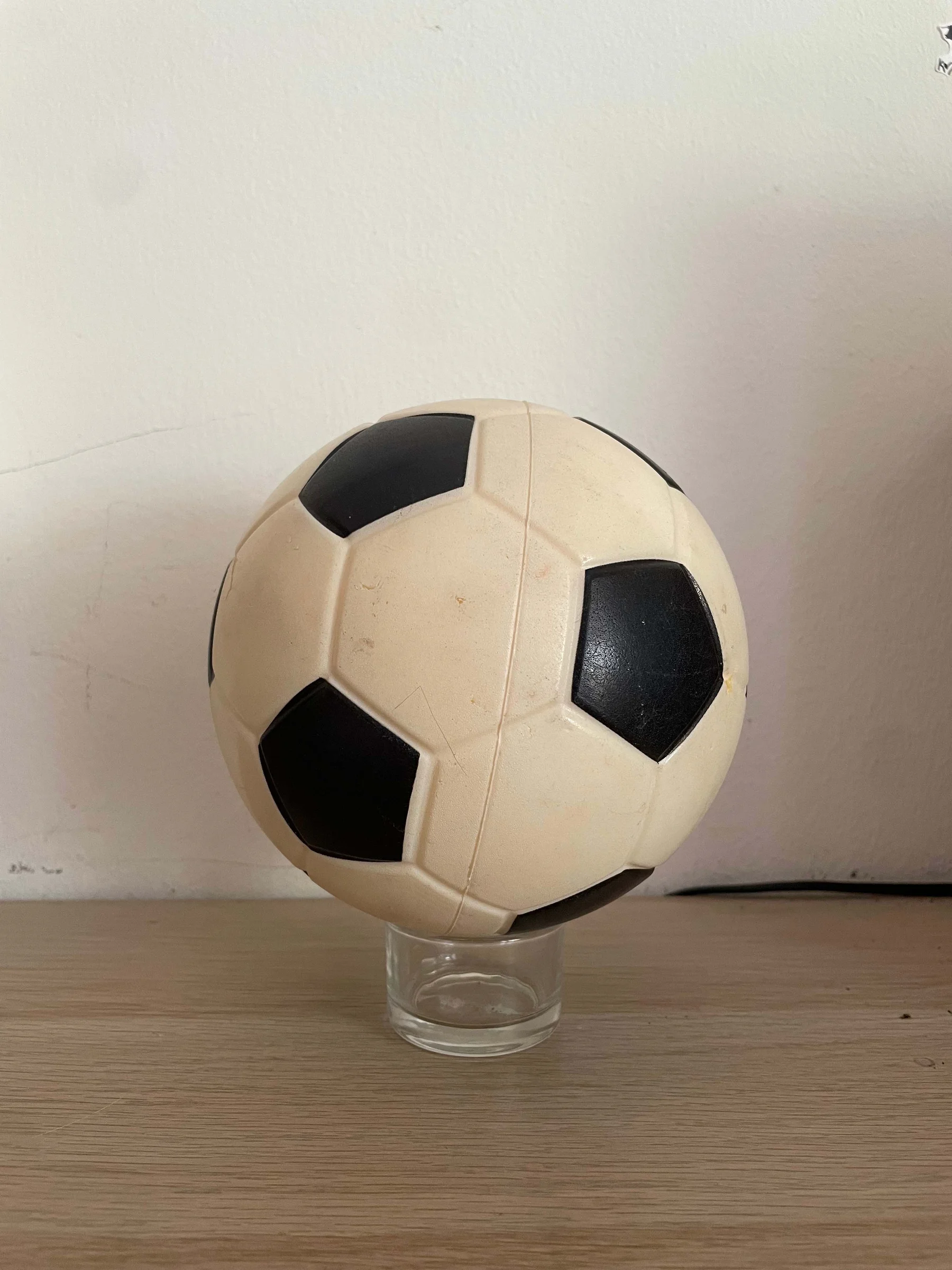
Source image: Input 001.jpg.webp: technical image of a ball on a glass stand.
Operational description:
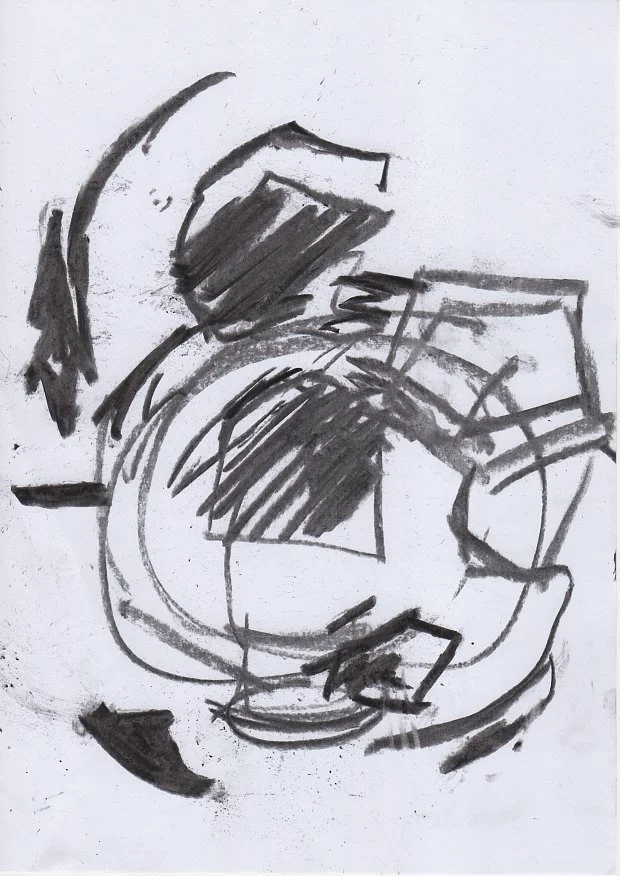
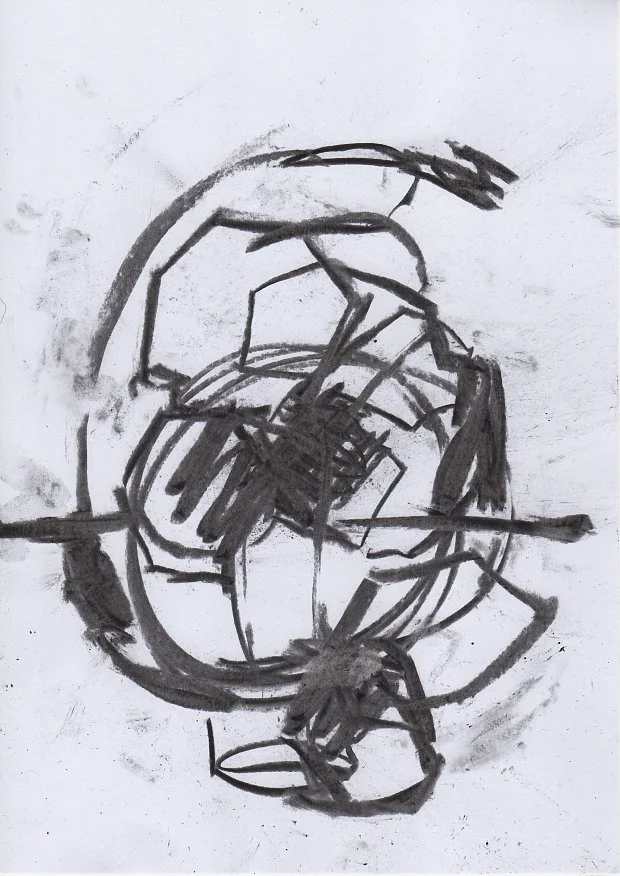
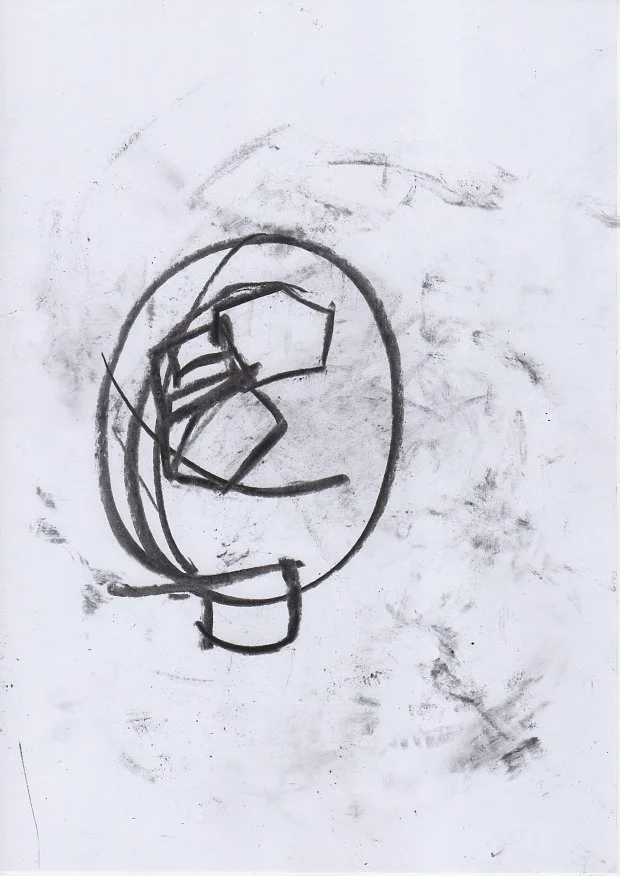
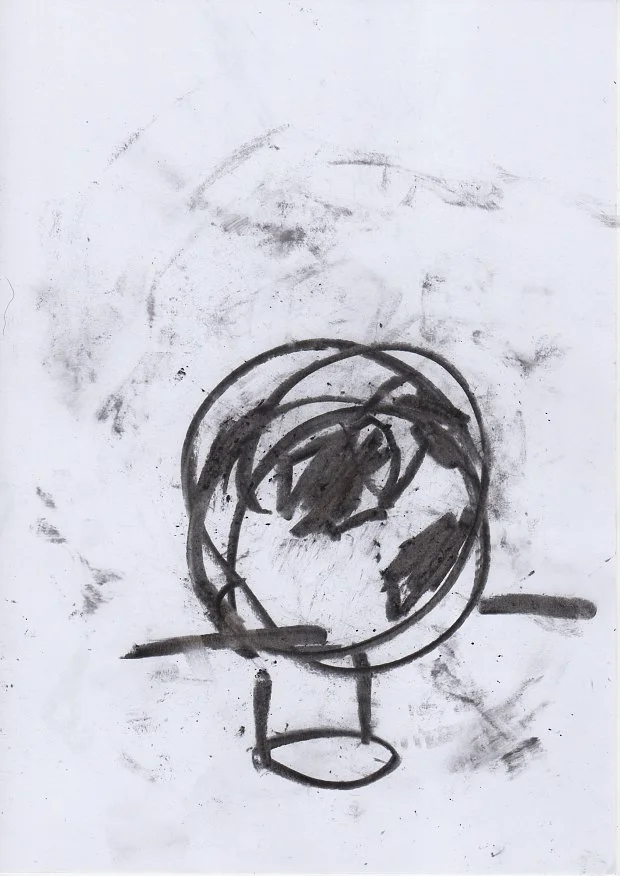
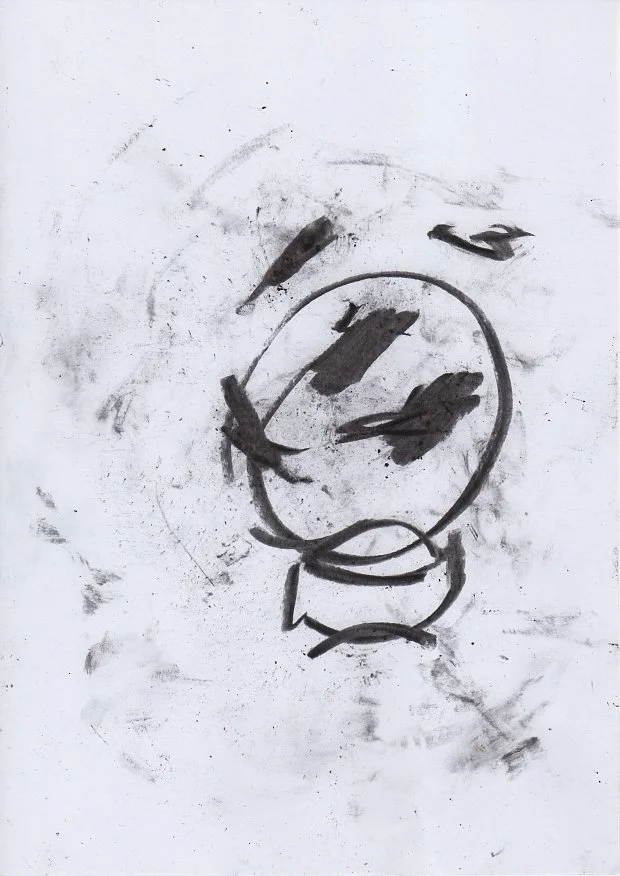
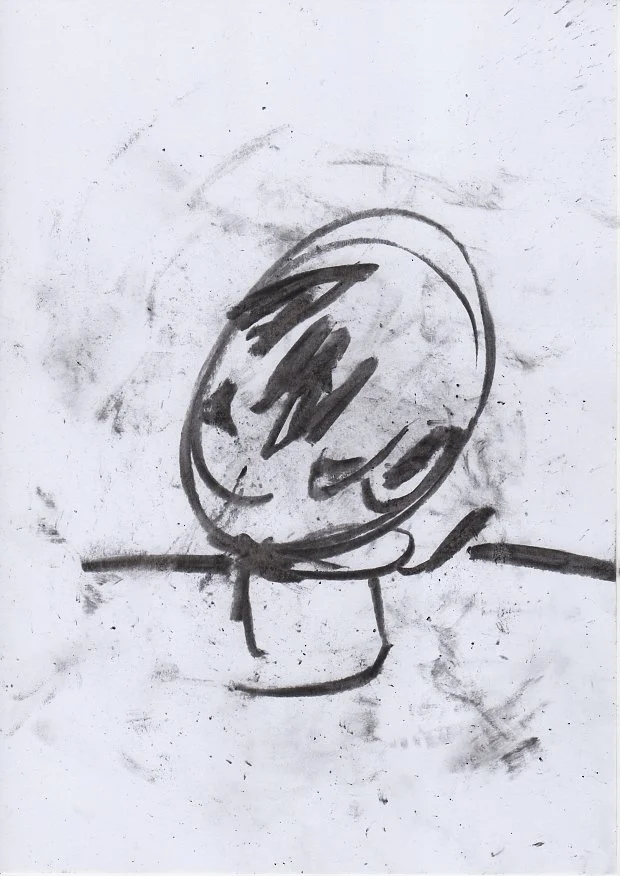
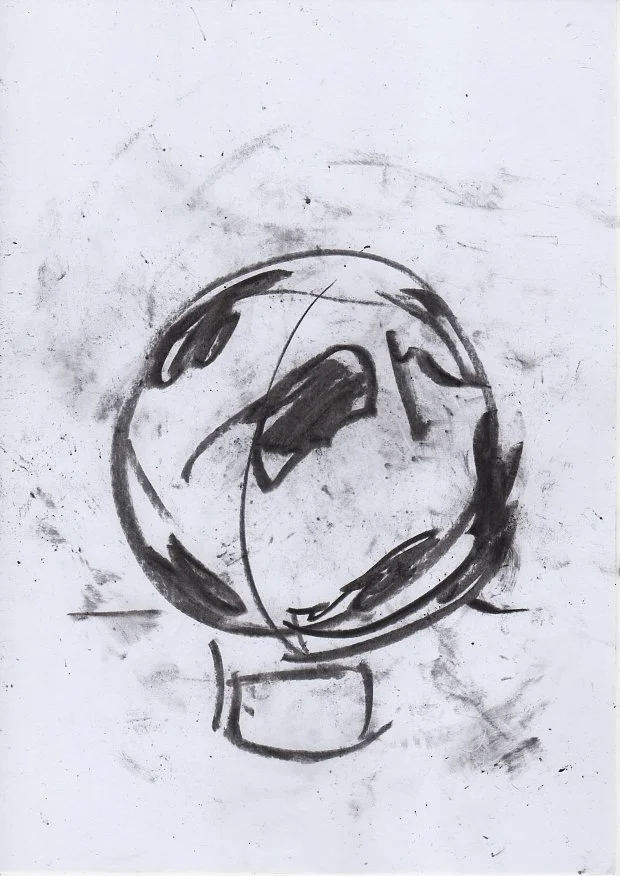
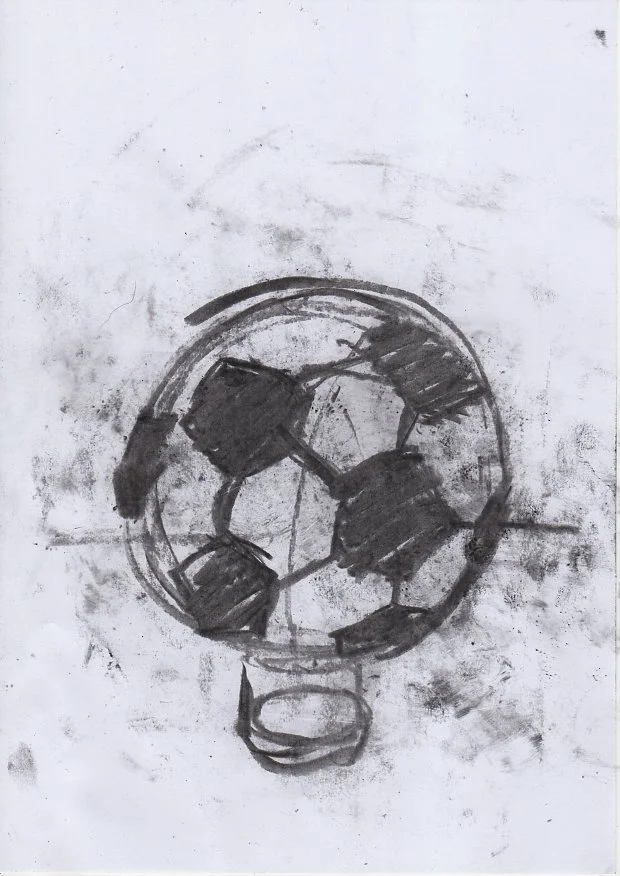
The technical image is translated into a charcoal drawing, regulating how much of it reaches the hand. In the first drawing, the ball is rendered without seeing it. In the following ones, looking is alternated with blind drawing: you look for a short while, stop looking, and draw, and with each new drawing you look a little longer. Each step is a different sheet of paper.
The image ceases to be an image and passes through another system: perception, memory, and gesture. What is drawn is not the photograph, but what remains available of it at that moment. The variable is the amount of visual information entering the translation.
2. Tools and procedure
Tools / medium:
- Charcoal
- Paper (one sheet per step)
- Reference technical image
- Scanner for recording
Technical procedure:
- Draw the ball without looking at the technical image.
- On the next sheet, look at the image for a moment, stop looking, and draw.
- Repeat on each new sheet, slightly increasing the observation time each time.
- Scan each sheet.
The sequence preserves 13 drawings, made on May 14, 2026, between 17:48 and 18:04.
Script: Not applicable.
Step recording: the date and time of the scan and the original filename of each file are in its image metadata (EXIF, ImageDescription field).
3. Variables
Controlled variables:
- Amount of observation of the technical image before each drawing, increasing throughout the sequence.
- Medium: charcoal on paper.
- A new sheet per step.
Uncontrolled / accidental variables:
- Exact observation time at each step: undocumented.
- Charcoal smudges in the background from the wrist rubbing against the sheet.
- Pressure, speed, and thickness of the stroke.
- What memory retains or invents between looking and drawing.
4. Visual sequence
The steps follow the order in which they were drawn: from zero observation (step 01) to the longest observation (step 13).
Initial image
Step 01
Step 02
Step 03
Step 04
Step 05
Step 06
Step 07
Step 08
Step 09
Step 10
Step 11
Step 12
Step 13
5. Visual selection
Crisis / threshold according to AI-assisted reading
The sequence moves through the reading in the opposite direction to the other operations: it starts from the illegible and ends at the stable.
- Steps 01–02, close to the destroyed: several balls overlap on the same sheet, with unclosed circles, loose smudges, and polygon fragments tossed toward the edges. The idea of “something round” remains, but without a fixed place or scale.
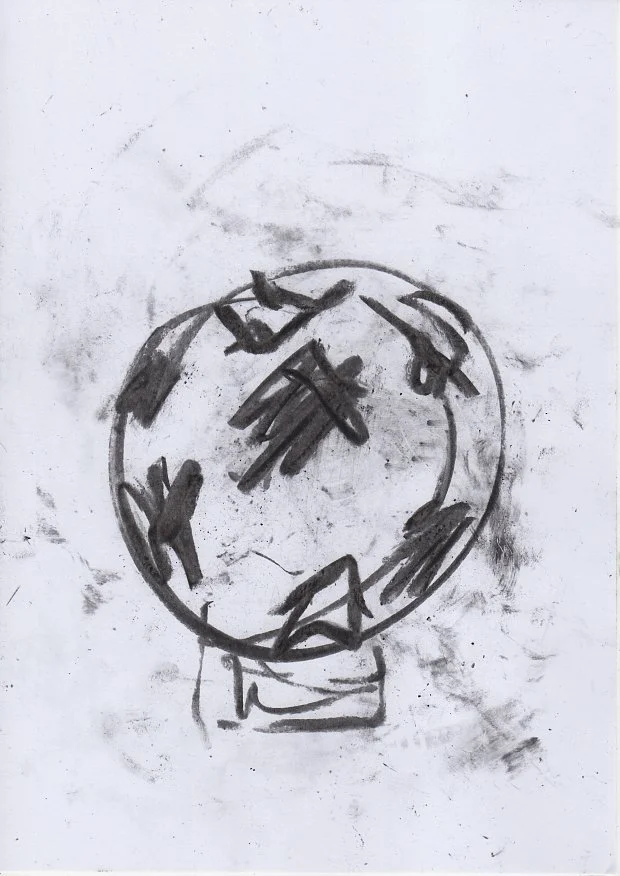
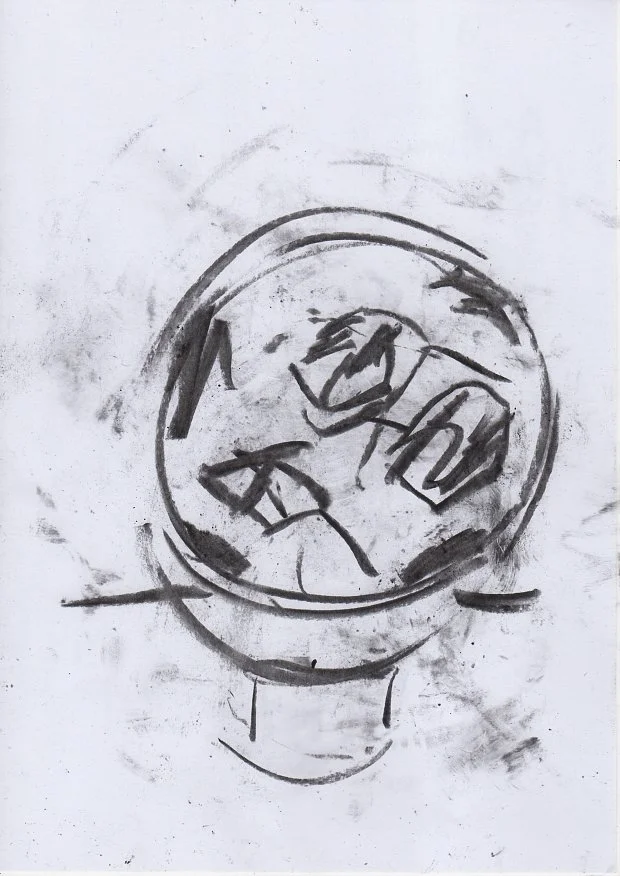
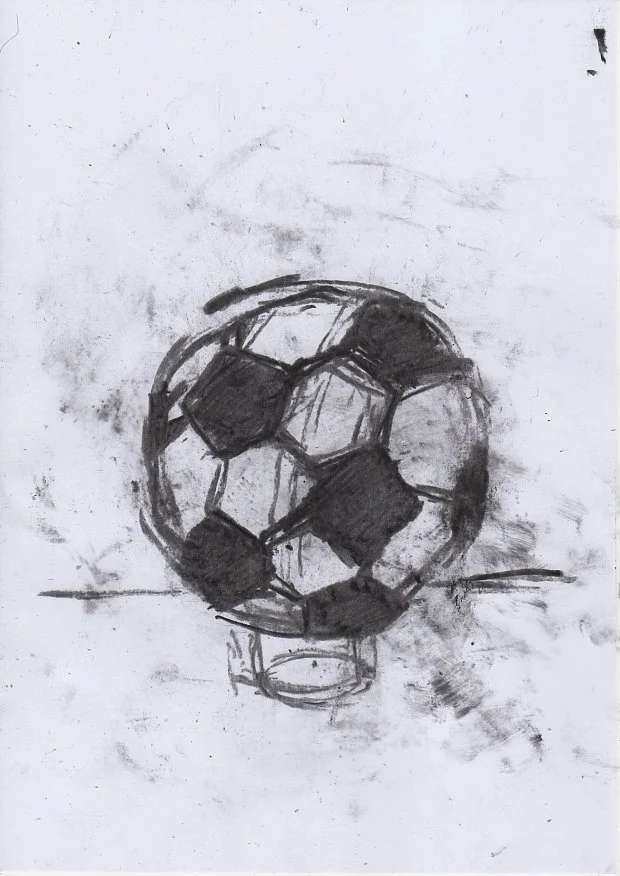
- Steps 03–09, friction zone: the structure is already there (circle, stand, table line), but the interior does not match the object. Pentagons appear as cross-outs, rectangles, or floating letters inside the sphere, and the ball tilts or deforms (step 06). Recognition works through the schema, not through the drawing of the pattern.
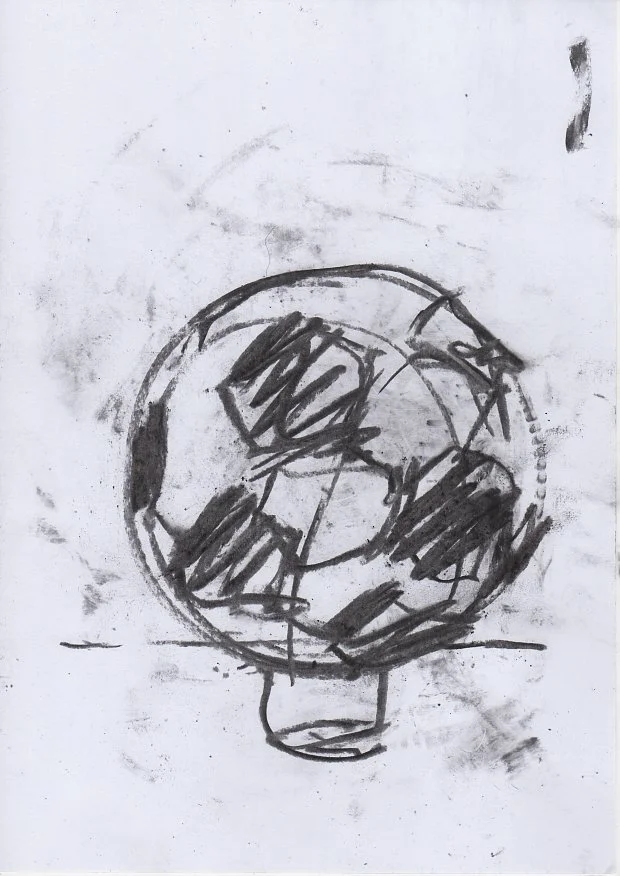
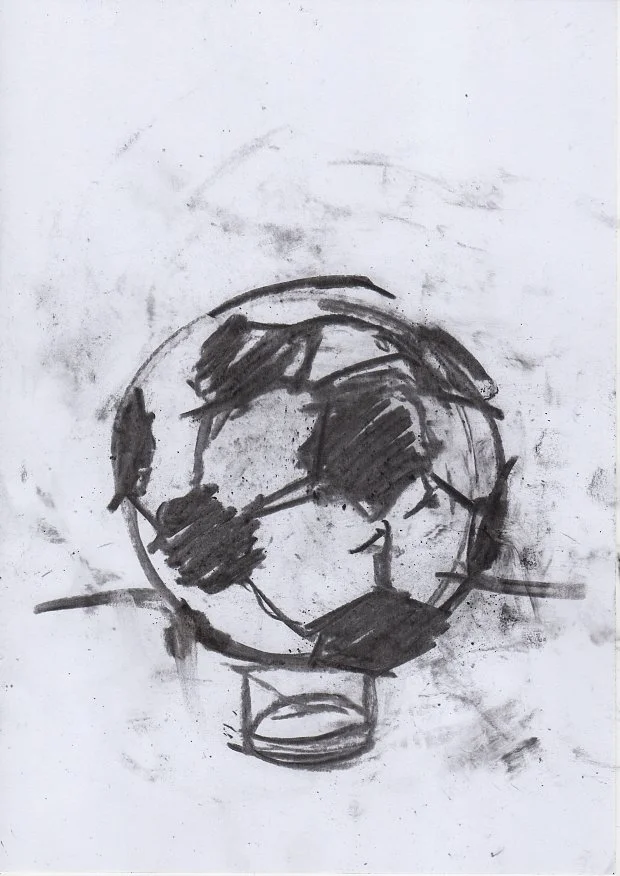
- Steps 10–13, toward the stable: the pattern of pentagons falls into order and the ball becomes a “correct” soccer ball. In step 13, the drawing is read as a resolved representation, the cliché of the ball.
The most fertile point appears in step 09: the object is recognized as complete, but its surface is made of signs that memory could not place.
Step 09
Crisis / threshold according to my perception
Pending selection.
6. Crisis and formal-perceptual reading
The operation affects form, contour, figure/ground relationship, legibility, and recognition:
The first thing to stabilize is not the object, but its schema: the circle, the stand, and the table line appear very early and remain throughout the sequence. The last thing to arrive is the specific detail: the pentagon pattern, which is what makes the ball that particular ball and not just any sphere. Between those two moments, the image exists as a structure without content: it is known what it is, but not what it looks like.
The contour is constructed through repetition: several overlapping circles search for a single edge that does not exist at first. In the first steps, this search remains visible and the drawing shows the process of searching for the form rather than the form itself. The background is not empty: the smudges from the wrist’s friction record the body that drew, a trace that the technical image lacked.
7. Final evaluation and artistic reference
Operation notes / what I learned:
In this operation, the crisis is reached by reducing information, not by destroying it: what is controlled is how much of the image reaches the hand. The order in which the image is reconstructed (first the schema, then the detail) shows which parts of an image memory retains and which parts it needs to look at again.
Final_status:
Works:: Pending
How it destroys the image:
Works_on:: Configurative
Level and richness of crisis:
Crisis:: Pending
Decision:
Selection:: Pending
Possible artistic reference
Referent:: [[]], [[]], [[]]
Possible works: